
-
Bus, Cab
-
Standatd Hotel
-
Delhi
-
Spritual Trip, Hiking, Budegt Friendly, Cultural Trip
-
All meals during the trek
-
English, Hindi
-
2-15
Char Dham Yatra : A Spiritual Journey Through the Himalayas
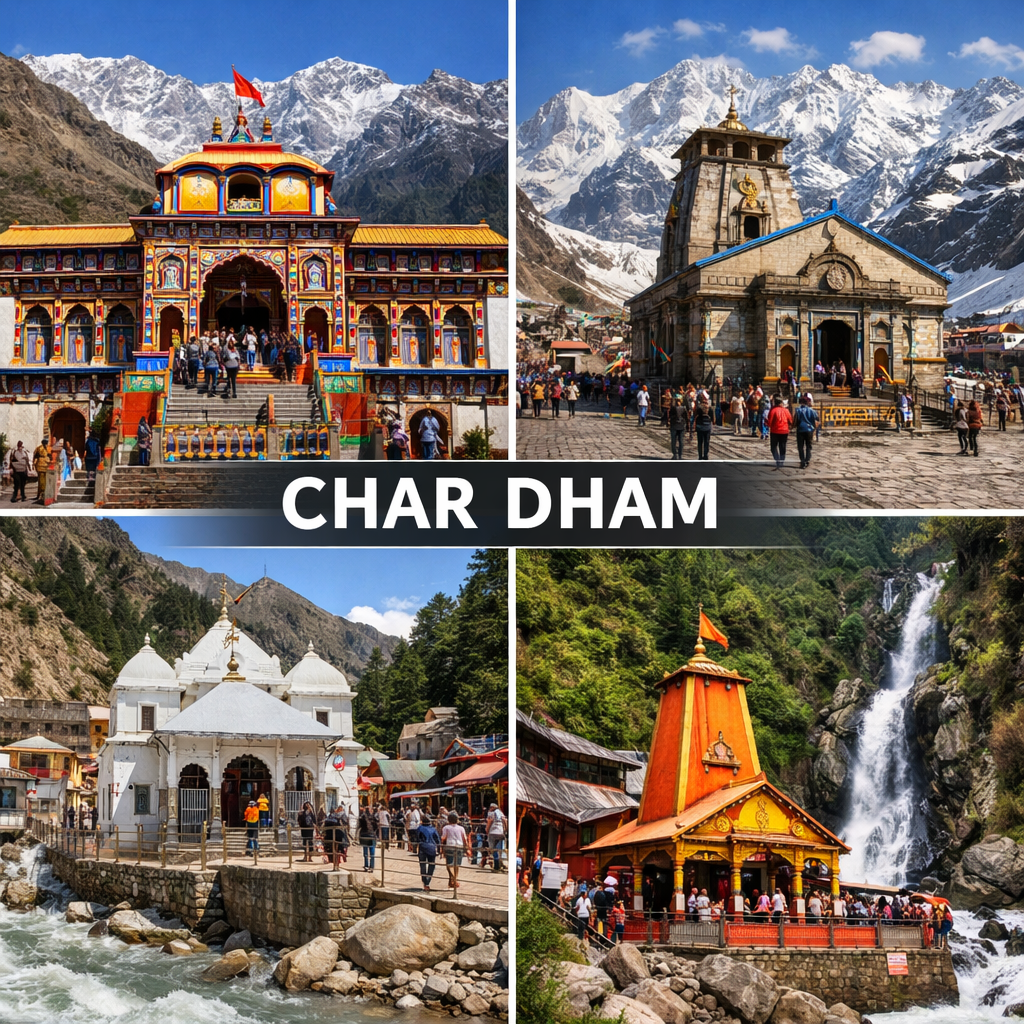
The Char Dham Yatra is one of the most sacred pilgrimages in India. It takes you to four holy places in the beautiful state of Uttarakhand, nestled in the mighty Himalayas. These places are Yamunotri, Gangotri, Kedarnath, and Badrinath. For many Hindus, visiting these sites is like a dream come true—a chance to connect with God, find inner peace, and enjoy stunning nature. This yatra isn’t just about religion; it’s also an adventure filled with mountains, rivers, and fresh air.
In this article, we’ll dive deep into what makes the Char Dham Yatra special. I’ll describe each dham in detail, share its history, and explain why people go there. We’ll also talk about how to plan your trip, the best time to visit, and some tips to make it smooth. Whether you’re a first-time pilgrim or just curious, this guide is written in simple words to help you understand and get excited.
Char Dham Yatra form Delhi
Char Dham means “four abodes” in Hindi. These are the homes of important gods in Hinduism. The yatra started centuries ago as a way for devotees to seek blessings and wash away sins. It’s believed that completing this journey brings moksha, or freedom from the cycle of birth and death.
The route usually starts from Yamunotri and ends at Badrinath, covering about 1,500 – 1,600 kilometers if you go by road. You can travel by car, bus, or even helicopter for parts of it. The whole Char Dham Yatra form Delhi takes 10 to 11 days, but it depends on your pace and weather. Along the way, you’ll see snow-capped peaks, gushing rivers, and green valleys. It’s tough because of high altitudes and rough paths, but the rewards are huge—spiritual growth and unforgettable memories.
Detailed Description of the Char Dham
Each dham has its own story, temple, and natural wonders. Let’s explore them one by one.
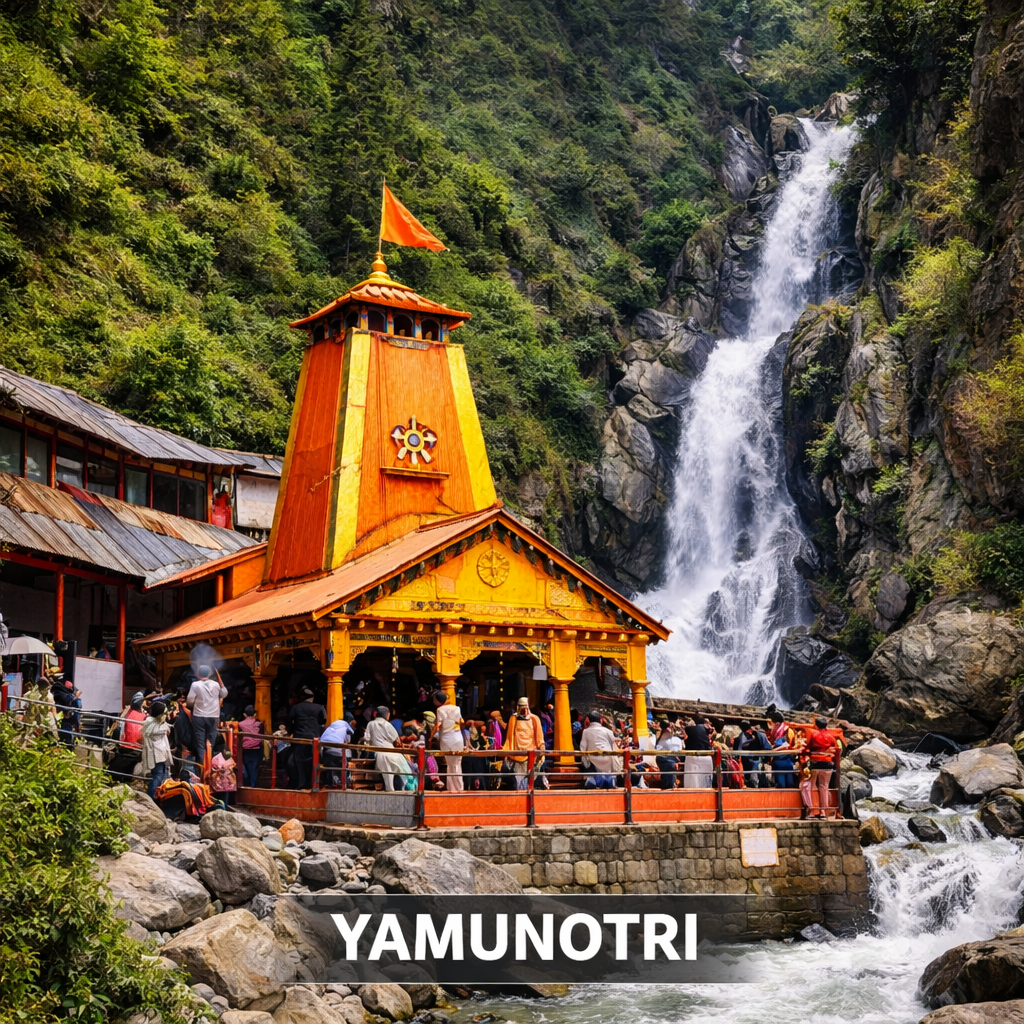
1. Yamunotri: The Source of the Yamuna River
Yamunotri is the first stop and the birthplace of the holy Yamuna River. It’s located at about 3,293 meters above sea level in the Garhwal Himalayas. The temple here is dedicated to Goddess Yamuna, who is seen as the sister of Yama, the god of death. Legend says that bathing in the Yamuna’s waters can protect you from untimely death.
The main attraction is the Yamunotri Temple, a simple stone structure built in the 19th century. It’s surrounded by hot springs like Surya Kund, where pilgrims cook rice and potatoes as offerings. To reach the temple, you hike about 6 kilometers from Janki Chatti, the last road point. The path is steep but scenic, with views of waterfalls and pine forests.
Yamunotri teaches us about purity and devotion. The river starts from the Yamunotri Glacier, and its clear waters symbolize cleansing the soul. Many people start their yatra here in May when the temple opens after winter snow. It’s a place where you feel close to nature’s power.
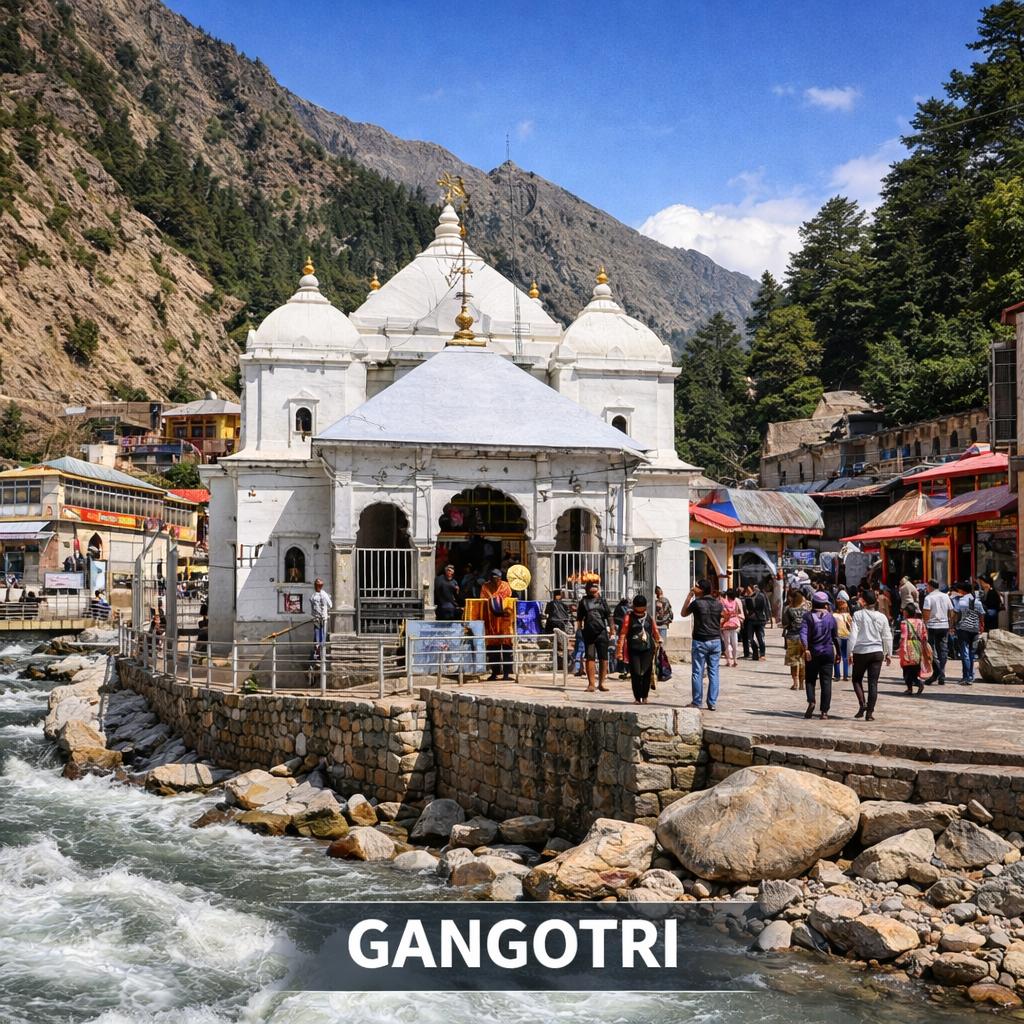
2. Gangotri: The Origin of the Ganga
Next is Gangotri, the source of the sacred Ganga River, at 3,100 meters high. This dham honors Goddess Ganga, who came to Earth to wash away humanity’s sins. According to myth, King Bhagirath prayed hard to bring the Ganga down, and Lord Shiva caught her in his hair to control the flow.
The Gangotri Temple is a white granite building from the 18th century, right beside the Bhagirathi River (which becomes the Ganga later). Nearby is Gaumukh, a glacier that’s the actual starting point of the river—it’s a tough 18-kilometer trek from Gangotri. Pilgrims dip in the icy waters for blessings, but be careful; it’s very cold!
Gangotri is peaceful with tall deodar trees and the sound of rushing water. It’s open from May to November. Visiting here reminds us of life’s flow and the importance of humility. The fresh mountain air and starry nights make it feel magical.
3. Kedarnath: Abode of Lord Shiva
Kedarnath is perhaps the most famous dham, dedicated to Lord Shiva. At 3,583 meters, it’s one of the 12 Jyotirlingas—special shrines for Shiva. The story goes that the Pandavas from the Mahabharata sought Shiva’s forgiveness here after the great war. Shiva appeared as a bull, and the temple marks where his hump stayed.
The Kedarnath Temple is an ancient stone wonder, rebuilt after floods in 2013. It’s backed by snow-covered peaks and the Mandakini River. To get there, you trek 16 kilometers from Gaurikund or take a helicopter. The path winds through meadows and bridges, but it’s challenging due to rain and altitude.
Inside, the atmosphere is electric with chants and bells. Pilgrims offer prayers for strength and protection. Kedarnath opens in late April or May and closes in November. It’s a test of faith—many walk barefoot as devotion. The views of the Himalayas here are breathtaking, making you feel small yet connected to something bigger.
4. Badrinath: Home of Lord Vishnu
The last dham is Badrinath, dedicated to Lord Vishnu (also called Badri). At 3,133 meters in the Chamoli district, it’s near the Alaknanda River. Myth says Vishnu meditated here for thousands of years, and his wife Lakshmi turned into a berry tree to shield him—hence “Badri” from badri tree.
The Badrinath Temple is colorful and grand, with a gold-plated roof. It’s one of the 108 Divya Desams, holy Vishnu sites. Nearby hot springs like Tapt Kund are perfect for a holy bath before entering. The temple opens in May and closes in November, drawing lakhs of visitors.
Badrinath is surrounded by peaks like Neelkanth, looking like a pyramid. It’s a place for reflection and gratitude. Mana Village nearby is India’s last village before Tibet, with caves linked to ancient sages. Ending the yatra here feels like completing a circle of blessings.
Planning Your Char Dham Yatra
To make your trip successful, plan well. The best time is May to June or September to October—avoid monsoons (July-August) due to landslides. Summers are pleasant, but winters close the temples.
Start from Haridwar or Rishikesh, then follow the route: Delhi→Haridwar→Rishikesh→Yamunotri → Gangotri → Kedarnath → Badrinath. Book permits online, as they’re needed for eco-sensitive zones. Stay in guesthouses or ashrams; food is simple vegetarian.
Tips:
- Pack warm clothes, rain gear, and medicines for altitude sickness.
- Hire a guide or join a group tour for safety.
- Respect nature—don’t litter and follow eco-rules.
- If you’re elderly or have health issues, use helicopters or ponies.
- Budget: Depends on your comfort and needs.
Conclusion
In our busy world, this yatra is a break for the soul. It’s not just for Hindus; anyone can join for the peace and adventure. It teaches patience, as delays happen due to weather. Plus, it boosts local economy and preserves culture.
I’ve heard stories from pilgrims who say it changed their lives—finding clarity or healing old wounds. If you’re thinking of going, prepare your heart as much as your backpack. The mountains will welcome you with open arms.


